
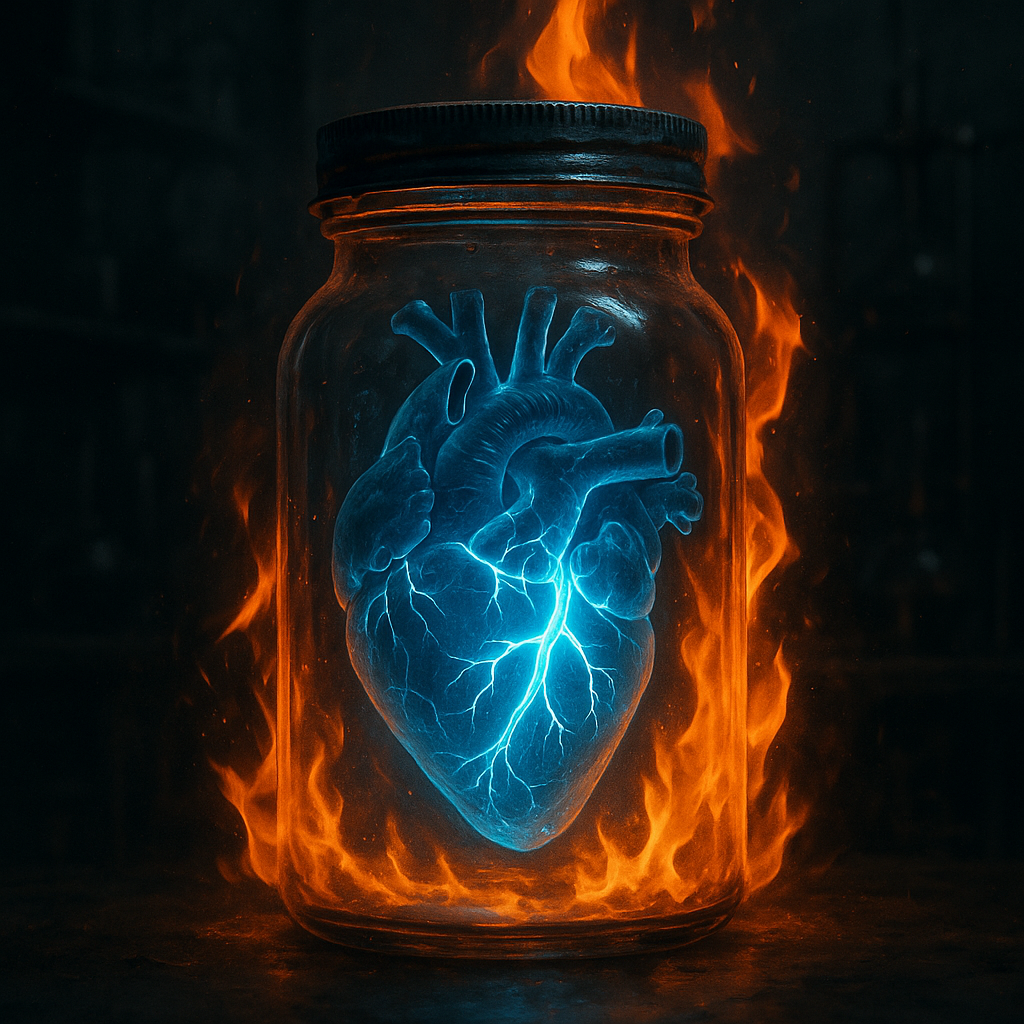

The Secret Adrenaline Bond: Why Your Brain Mistakes Fear for Attraction
Have you ever wondered why some of the most intense relationships start in the middle of a crisis? Or why people seem to fall in love faster on a rollercoaster than they do over a quiet dinner?
Your brain is a master at processing information, but it has one major flaw: it is surprisingly bad at identifying why your heart is beating fast. This is the secret world of the Misattribution of Arousal.
It is a physiological glitch that allows you to bypass logical filters and create instant, deep-seated bonds. If you understand how to trigger this, you hold the key to absolute influence in both your personal and professional life.
The Neurobiology of the “Mistaken” Heart
Your body has a specific way of reacting to high-stakes situations. When you are excited, scared, or physically exhausted, your sympathetic nervous system kicks into high gear. Your pupils dilate. Your palms get sweaty. Your heart hammers against your ribs.
This is the “Arousal” state. Here is the catch: your brain doesn’t always know the source of that arousal. It looks around for the most logical explanation in its immediate environment.
If you are standing on a shaky bridge looking at a beautiful person, your brain might ignore the height and decide, “My heart is racing because I’m attracted to this person.” You have just misattributed fear for passion.
This is why high-energy environments create such lasting impressions. It’s a form of physiological The Anchoring Trigger where the intensity of the moment is permanently tied to your presence.
The Famous Suspension Bridge Study
In 1974, psychologists Donald Dutton and Arthur Aron proved this with a legendary experiment. They had an attractive woman approach men on two different bridges. One was a stable, low bridge. The other was a terrifying, swaying suspension bridge high above a canyon.
The result? The men on the scary bridge were significantly more likely to call the woman later and report higher levels of attraction. Their brains took the fear of falling and rebranded it as romantic chemistry.
They weren’t just experiencing a social connection; they were experiencing a neurobiological hijack. They couldn’t help themselves because their bodies told them they were in the presence of something—or someone—extraordinary.
Why Coffee Dates Are Killing Your Influence
Most people play it safe. They go for coffee. They sit in a quiet room. They have a polite conversation. The problem? The physiological arousal level is zero. Your heart rate is steady, and your brain is bored.
When there is no physical excitement, there is no “spark” to misattribute. You are effectively leaving your impact up to chance. Without that physiological spike, you are struggling against The Social Comparison Trigger, as the person subconsciously compares your “boring” energy to the high-stimuli world of their smartphone.
If you want to be unforgettable, you need to change the environment. You need to move. You need to create a sense of adventure, even if it’s just walking through a crowded, vibrant market or watching a suspenseful movie.
How to Use the Adrenaline Bond in Business
This isn’t just for dating. It’s a powerful tool for high-ticket sales and leadership. If you can present your solution right as a client is feeling the “heat” of a problem, their relief and the adrenaline of the high-stakes decision will bond them to your brand.
Think about why major product launches are held in high-energy arenas with loud music and flashing lights. It’s not just for show. It’s to get the heart rates up so the audience misattributes that physical excitement to the product itself.
Control the environment, and you control the emotional label the brain attaches to the experience.
Actionable Checklist: Triggering the Bond
- Choose High-Stimulus Environments: Opt for concerts, sports events, or active experiences over static ones.
- The “Shared Challenge” Hack: Tackle a difficult task or a physical workout with someone to create shared physiological arousal.
- Master the Reveal: In presentations, build tension before showing the solution. The spike in cortisol followed by a dopamine hit creates a chemical bond.
- Physical Movement: Even a brisk walk increases heart rate enough to prime the brain for misattribution.
- Emotional Storytelling: Use high-stakes narratives that trigger a physical response (goosebumps or tension) in your listener.
The Ethical Boundary
With great power comes great responsibility. The Adrenaline Bond is a tool of influence, not a tool for manipulation. Using fear to force a connection is short-lived and can lead to resentment once the heart rate slows down.
Instead, use this trigger to enhance genuine connections. Help people feel alive, and they will naturally want to be around you. You aren’t tricking them; you are simply giving their brain a reason to pay attention in a world designed to distract them.
Your brain is a biological machine. When you know which buttons to press, you stop being a passenger in your social life and start being the architect of your own authority.