
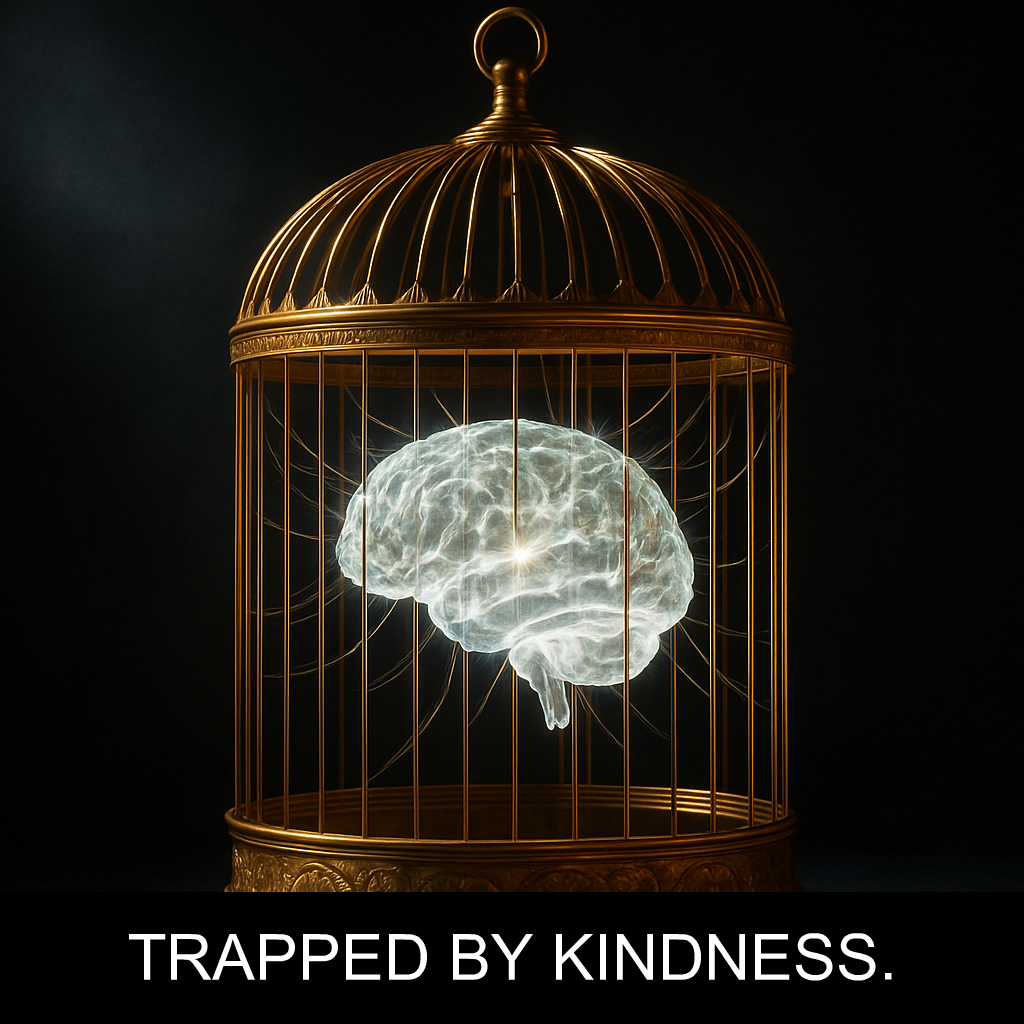

The Gilded Cage Effect: The Secret Manipulation of Feeling “Too Grateful to Leave”
Observed in everyday social dynamics, there’s a form of control so subtle, so beautifully wrapped in generosity, that most people never even realize they’re caught in it. It isn’t a prison of steel bars and locked doors. No, this prison is far more insidious. Its bars are forged from favors, its walls are built with kindness, and the key is buried under a mountain of guilt. In my research into behavioral patterns, I’ve come to call this The Gilded Cage Effect.
Think about it. The friend who constantly pays for your dinner, buys you lavish gifts, and helps you move… but then expects your unwavering loyalty and gets subtly offended if you spend time with other people. Or the boss who offers an incredible salary, flexible hours, and amazing perks… but cultivates a high-pressure environment where leaving feels like an act of profound betrayal. They aren’t holding a gun to your head. They’re holding your gratitude hostage. It works. And it’s terrifyingly effective.
How the Cage is Built: The Architecture of Control
This isn’t an accident. It’s a strategy. When studying behavioral patterns, I’ve noticed that manipulators who master The Gilded Cage Effect are architects of obligation. They don’t build a prison you want to escape; they build a paradise you feel you don’t deserve to leave. 🧐
It’s like a zookeeper giving a snow leopard the perfect enclosure. The temperature is regulated, the best food is provided on schedule, and there are no predators. The leopard is safe, comfortable, and well-fed. But ask it to hunt? To survive in the wild? It can’t. Its core instincts have been dulled. It has traded freedom for comfort. That’s the cage.
The construction happens in three distinct phases:
1. Overwhelming “Generosity”: The foundation is a relentless campaign of favors and gifts. These aren’t just small acts of kindness. They are often disproportionate, designed to create a significant imbalance. The manipulator showers the target with support, money, opportunities, or affection far beyond the normal scope of the relationship. This triggers a powerful human instinct: the rule of reciprocity. You feel an intense psychological pressure to repay the debt, but the debt is designed to be unpayable.
2. Information & Access Monopoly: The manipulator slowly becomes the target’s primary source of validation, social connection, or even critical information. They might subtly drive a wedge between you and your old friends, making you dependent on their social circle. In a work context, they might hoard knowledge, ensuring you have to go through them for everything. This isolation makes the thought of leaving feel like stepping off a cliff into total darkness.
3. Cultivating Perceived Incompetence: This is the most damaging part. The manipulator subtly undermines the target’s confidence. They frame their “help” as essential because the target is supposedly incapable without it. Phrases like, “Oh, let me handle that for you, you always get so stressed,” or “You’d be lost without me, wouldn’t you?” are common. Over time, the victim internalizes this narrative. They start to believe they truly *need* the manipulator to function, making the cage seem like a necessary sanctuary.
The Brain on Lockdown: Why It’s So Hard to See the Bars
Why do smart, capable people fall for this? Because it exploits our core psychological wiring. It’s not a failure of character; it’s a feature of our cognition being turned against us.
Your brain is fighting a war with itself. On one hand, you have the raw data: this person gives you so much. They are good to you. On the other hand, you have the feeling: a constant, low-grade anxiety and a suffocating lack of autonomy. This creates a state of intense cognitive dissonance. To resolve the discomfort, your brain chooses the easier path. It dismisses the feeling of being trapped and doubles down on the belief that the person is just incredibly generous.
This is where the trap snaps shut. The manipulator isn’t just controlling your circumstances; they’re co-opting your own internal justification mechanisms. This often operates on the mistaken belief in unwritten rules of engagement, a psychological trap I’ve explored before known as The Implicit Contract Fallacy. You feel you’ve signed a contract of unending loyalty with your silence and acceptance of their gifts. Breaking it feels like a moral failure.
Spotting the Bars: Are You in a Gilded Cage?
Recognizing the cage from the inside is brutally difficult. Your mind is actively working to convince you the cage is a castle. But there are signs. According to behavioral studies I’ve analyzed, the emotional tells are often more reliable than the logical ones. Ask yourself these questions with radical honesty:
- When you receive a “gift” or “favor” from this person, is your first feeling gratitude or a faint sense of dread?
- Does their help feel empowering, or does it subtly reinforce a feeling of your own inadequacy?
- Has your social or professional circle shrunk to primarily include people they know and approve of?
- Do you find yourself editing your stories or hiding your successes to avoid making them feel unneeded or insecure?
- When you imagine a future without them, is your primary emotion sadness at their loss, or a terrifying, exhilarating sense of freedom mixed with guilt?
That last one is the key. The defining feature of The Gilded Cage Effect isn’t the presence of control, but the presence of guilt at the thought of being free.
The door isn’t locked. It’s just heavy with gratitude. What would it take for you to push it open?