
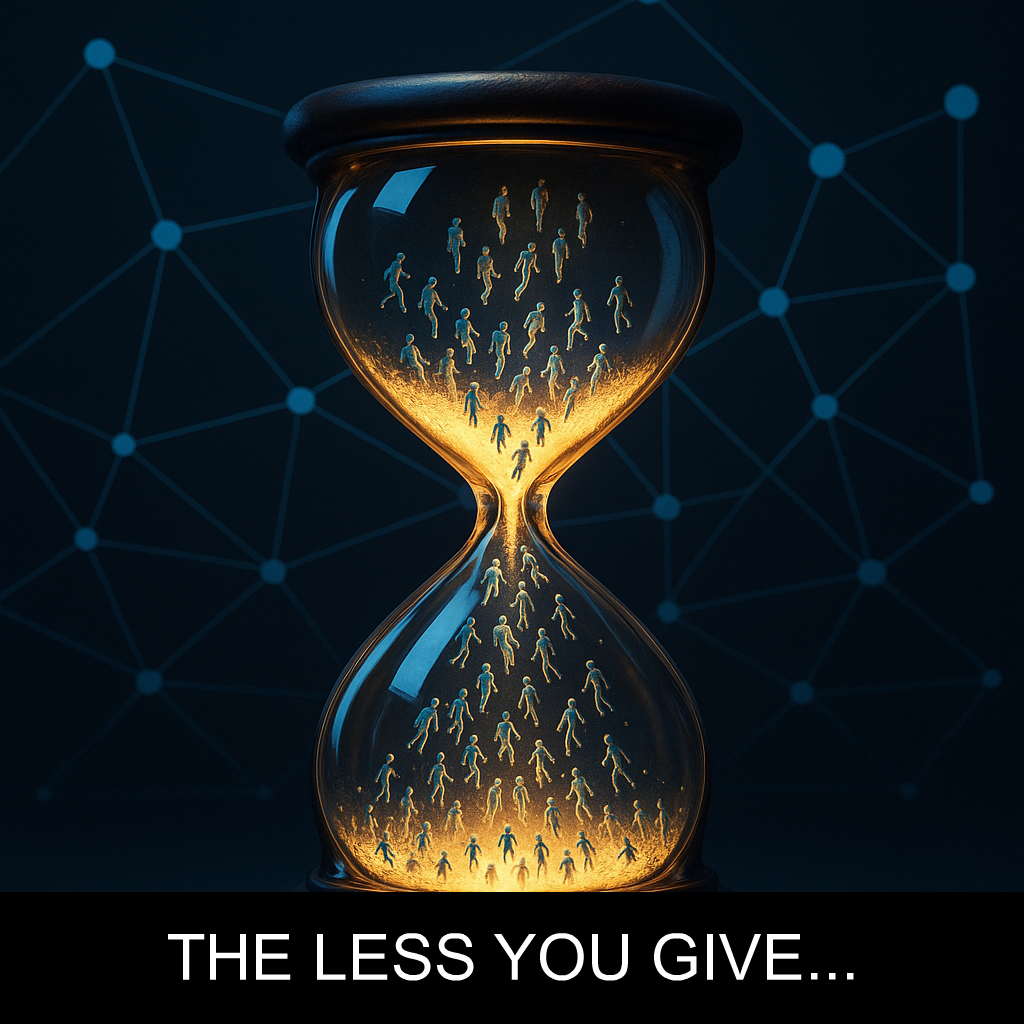

The Scarcity Choice Paradox: Why Withholding Is Your Secret Social Lever
Have you ever noticed how a half-empty jar of cookies feels more tempting than a full one? Or why that one person who rarely texts back suddenly becomes the main character in your thoughts? In my research into the friction points of human interaction, I’ve found that we are fundamentally wired to chase the sunset. Once something feels abundant, our brain stops calculating its value and starts treating it like background noise.
The Psychology of the Dwindling Resource
Observed in everyday social dynamics, the Scarcity Choice Paradox suggests that our perception of quality is tethered to availability. When I analyzed behavioral studies on consumer habits and dating, a recurring theme emerged: the moment an option feels restricted, the brain’s amygdala flags it as a priority. It is a survival mechanism left over from our ancestors. If the berries were running out, you had to act fast. Today, those ‘berries’ are attention, validation, and time.
When you provide constant, 24/7 availability, you aren’t being helpful. You are becoming a commodity. Think about it. Air is vital, yet we don’t spend our days praising it. Why? Because it’s everywhere. Gold, on the other hand, is mostly useless for survival, but its rarity makes us obsess over it. This is exactly how The Contrast Trigger works in social settings—high value is only recognized when it stands against a backdrop of lack.
How Availability Erodes Influence
If you are the person who always says “yes,” your “yes” eventually loses its weight. It becomes expected. I’ve spent years dissecting why some leaders command a room while others are ignored. The difference often lies in the economy of their presence. They don’t fill every silence. They don’t attend every meeting. They apply a deliberate social filter.
This isn’t about playing games. It’s about respecting the way the human brain assigns importance. When you are always there, you trigger a mental state known as habituation. Your friends, partners, or colleagues stop seeing your effort because it has become a constant. To break this, you must introduce a gap. This gap allows for the The Somatic Feedback Loop to reset, letting the other person actually feel the sensation of your absence.
3 Ways to Apply the Scarcity Choice Paradox
- The Power of the ‘No’: Start declining low-priority invitations. It signals that your time has a high market price.
- Selective Vulnerability: Don’t dump your entire life story on day one. Reveal your depth in layers, making each new piece of information feel earned.
- Timed Responses: Stop the instant-reply habit. Create a buffer that suggests you are occupied with a life of your own.
The Fear of Being Forgotten
Most people fail at this because they suffer from a deep-seated fear. They think, “If I’m not available, they’ll find someone else.” But the data I’ve studied suggests the opposite. Anxiety about losing a resource is a much stronger glue than the comfort of having it. By being slightly less available, you force the other person to subconsciously justify why they want your time. They start convincing themselves of your value.
It’s like a faulty smartphone notification. If it goes off every thirty seconds, you ignore it. If it goes off once a day, you check it immediately. You are the notification. Control the frequency, and you control the impact. I’ve seen this transform failing professional relationships into ones of mutual respect simply by shifting the ‘supply’ of attention.
The Ethical Boundary
Now, a word of caution from someone who devours these patterns: there is a fine line between high value and manipulation. Scarcity should be a reflection of a full life, not a hollow tactic. If you pretend to be busy but are actually just staring at your phone waiting to hit ‘send,’ the energy feels off. True social authority comes when the scarcity is real—because you are actually pursuing goals that matter more than a text thread.
Next time you feel the urge to over-explain, over-share, or over-commit, stop. Ask yourself: am I being the air or the gold? The brain only values what it might lose. Are you giving them enough room to miss you?