
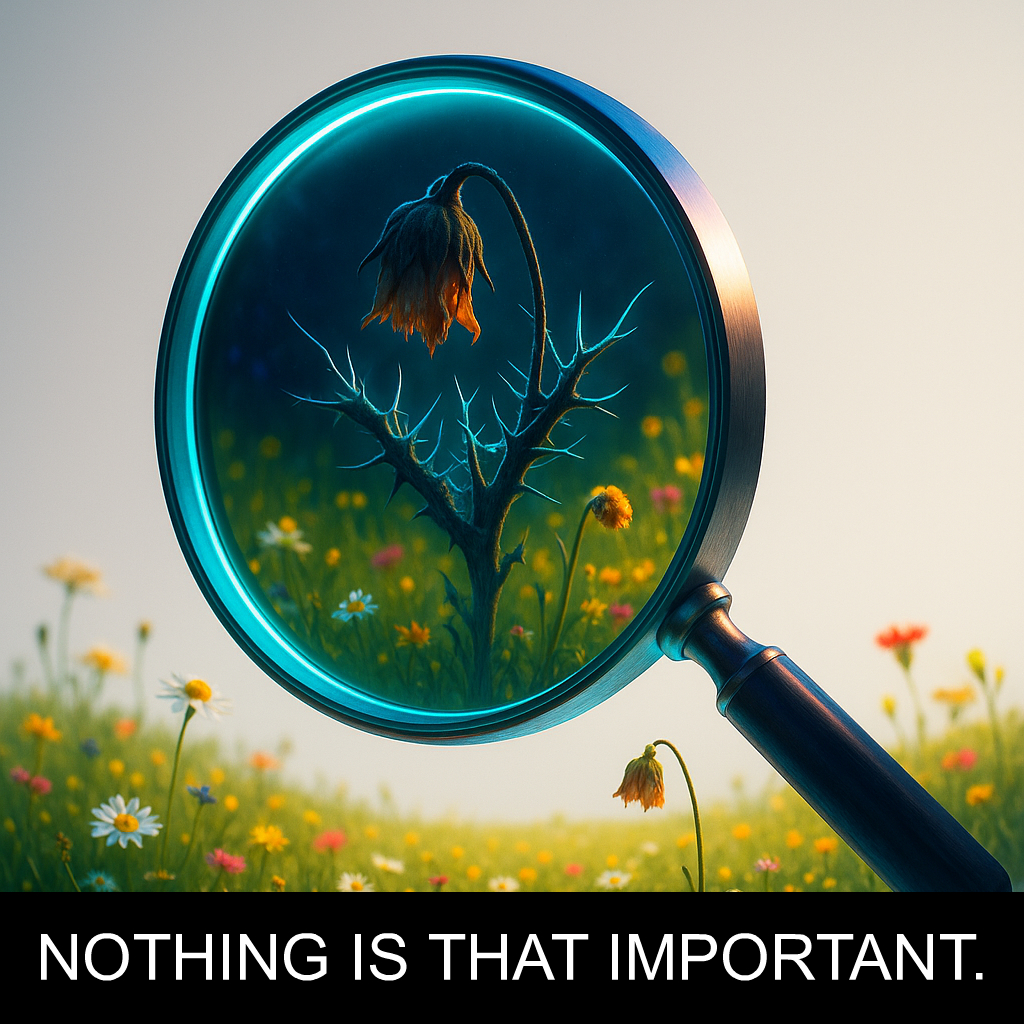

In behavioral economics research on affective forecasting, psychologists Daniel Kahneman and David Schkade identified a fundamental cognitive bias. A massive, glaring glitch in the human operating system. It’s like looking at a tiny scratch on a brand-new car. Once you see it, the car is ruined. You can’t see the sleek lines, the shiny paint, or the leather interior anymore. All you see is the scratch. That’s the Focusing Illusion in action.
When studying behavioral patterns, I’ve noticed that we are terrible at predicting what will actually make us happy. Why? Because we over-index on single variables. We think a promotion, a new city, or a specific relationship will change everything. We focus on that one thing so intensely that it fills our entire field of vision. But here is the cold, hard truth: Nothing in life is as important as you think it is, while you are thinking about it.
Key Takeaways
- Formulated by Daniel Kahneman and David Schkade (1998), the Focusing Illusion (Focalism) is captured by the maxim: “Nothing in life is as important as you think it is while you are thinking about it.”
- In their famous Midwest vs. California study, people assumed Californians were much happier because they focused solely on sunny weather while ignoring everyday work, health, and relationships.
- Zooming out to view how a purchase, move, or problem fits into a normal 16-hour day prevents affective forecasting errors.
The Spotlight in the Dark Room
Imagine walking into a massive, dark ballroom with a single, high-powered flashlight. Wherever you point that beam, the details are vivid. You see the intricate patterns on the wallpaper. You see the dust motes dancing in the air. Because that’s all you can see, you assume the entire room is made of wallpaper and dust. You forget about the chandeliers, the grand piano, and the marble floors hiding in the shadows.
Observed in everyday social dynamics, this happens when someone obsesses over a minor social gaffe. They replay a single awkward sentence for three days. In their mind, that sentence defines their entire reputation. They are caught in the illusion. They’ve magnified a grain of sand until it looks like a mountain. It isn’t a mountain. It’s just close to their eye.
This is closely tied to The Decoy Effect. When we perceive a lack of something—whether it’s money, time, or validation—our brain focuses on that void so fiercely that we lose the ability to make rational decisions about the resources we actually have. We become mentally tunneled.
The California Fallacy
In a landmark 1998 study by David Schkade and Daniel Kahneman, researchers asked students in the Midwest and students in California how satisfied they were with their lives and how satisfied they thought people in the other region were. Everyone—including the Midwesterners—assumed the Californians were significantly more satisfied because of the weather. But when they measured actual life satisfaction? There was no difference.
The Midwesterners were victims of the Focusing Illusion. They focused on the ‘Weather’ variable and ignored everything else that makes up a life: traffic, cost of living, job stress, and social connections. They magnified the sun and ignored the smog. We do this every time we say, “I’ll be happy when…”
We are essentially hacking our own The Hedonic Treadmill. By obsessing over a future ‘fix,’ we tank our current satisfaction, chasing a peak that will inevitably level out once the novelty wears off. The ‘thing’ is never as big as the ‘thought’ of the thing.
How to Break the Lens
You can’t stop your brain from focusing. It’s what brains do. But you can train yourself to recognize when the magnification is lying to you. It requires a conscious ‘zoom out’ maneuver. When you feel overwhelmed by a single problem or a single desire, you have to force the flashlight to move.
- The 10-10-10 Rule: Ask yourself: How much will this matter in 10 minutes? 10 months? 10 years? This forces a temporal zoom-out.
- Log the Mundane: When you’re dreaming of a big change, force yourself to list the boring parts of that change. A new house still needs the toilets cleaned.
- Peripheral Awareness: Intentionally list five things in your life that are currently ‘fine’ but that you aren’t currently thinking about.
It’s a simple shift, but it’s not easy. The brain is stubborn. It wants to believe that the thing it’s looking at is the only thing that matters. It wants to stay in the tunnel. But the tunnel is a lie.
I’ve spent years watching people blow up their lives—quitting jobs, ending relationships, or making reckless purchases—all because they fell for this illusion. They convinced themselves that one specific factor was the key to their entire existence. It never is. Life is a mosaic, not a single tile. If you stare at one tile long enough, you’ll hate it or worship it. Either way, you’re missing the picture.
So, what are you currently staring at? Is it really that big, or is it just really close to your face?
References & Further Reading
- Schkade, D. A., & Kahneman, D. (1998). Does living in California make people glücklich? A focusing illusion in judgments of life satisfaction. Psychological Science, 9(5), 340–346. Wikipedia / Psychological Science
- Wilson, T. D., & Gilbert, D. T. (2003). Affective forecasting. Advances in Experimental Social Psychology, 35, 345–411. American Psychological Association (APA)
Frequently Asked Questions (FAQ)
What is the Focusing Illusion according to Daniel Kahneman?
The Focusing Illusion—also known as focalism—is a cognitive bias where people place too much weight on one isolated factor or event when predicting future happiness, ignoring the dozens of other daily routines that actually occupy their attention.
What did the 1998 California vs. Midwest happiness study prove?
Both Midwesterners and Californians predicted that living in sunny California would make someone happier, yet actual life-satisfaction scores between the two regions were identical because climate only occupies a tiny fraction of daily attention.
How can you overcome the Focusing Illusion before a major decision?
Instead of imagining the single highlight of a new purchase, city, or job, walk through a realistic hour-by-hour Tuesday six months from now to see how much it truly changes your daily routine.