
Skip to content
  • Facebook
  • Instagram
  • TikTok
Logo for the 99 Brain Up blog about psychology and curiosities of the human mind. 99% Brain Up

Human psychological and behavioral curiosities, elevate your mind.

🔔 Brain UP
  • Home
  • Categories
    • Cognitive Biases
    • Dark Psychology
    • Neurobiology
    • Social Dynamics
  • About Us
  • Contact Us
About Mário Machado
Mário Machado is the Founder and Chief Behavioral Science Editor at 99BrainUp. He researches and synthesizes peer-reviewed cognitive psychology, behavioral economics, and social neuroscience studies into accessible frameworks for everyday critical thinking.
forer effect psychology - behavioral psychology illustration
Posted inCognitive Biases

The Forer Effect (Barnum Effect): Why Vague Statements Feel Deeply Personal

Posted by Mário Machado May 11, 2026
Explore the forer effect psychology (Bertram Forer, 1948): why generic personality assessments feel uniquely tailored to us through subjective validation.

Read More
propinquity effect psychology - behavioral psychology illustration
Posted inSocial Dynamics

The Propinquity Effect: How Proximity Shapes Human Relationships

Posted by Mário Machado May 10, 2026
Learn how the propinquity effect psychology (Festinger, Schachter, & Back, 1950) proves that physical and functional closeness drives human friendships and trust.
Read More
impostor syndrome psychology - behavioral psychology illustration
Posted inCognitive Biases

The Impostor Syndrome: Why High Achievers Doubt Their Success

Posted by Mário Machado May 9, 2026
Explore impostor syndrome psychology (Clance & Imes, 1978): why accomplished professionals attribute their success to luck and how to build genuine confidence.
Read More
halo effect psychology - behavioral psychology illustration
Posted inSocial Dynamics

The Halo Effect: How First Impressions Distort Objective Judgment

Posted by Mário Machado May 5, 2026
Discover the halo effect psychology (Edward Thorndike, 1920): how a single positive trait—like confidence or design—blinds our judgment in hiring and business.
Read More
just world fallacy psychology - behavioral psychology illustration
Posted inCognitive Biases

The Just-World Fallacy: Why Our Brains Assume Life Is Always Fair

Posted by Mário Machado May 4, 2026
Understand the just world fallacy psychology (Melvin Lerner, 1966): why the human brain craves cosmic fairness and how this bias distorts moral judgment.
Read More
fundamental attribution error psychology - behavioral psychology illustration
Posted inSocial Dynamics

The Fundamental Attribution Error: Why We Judge Character Over Context

Posted by Mário Machado May 4, 2026
Explore fundamental attribution error psychology (Lee Ross, 1977): why we blame others’ mistakes on their personality while excusing our own by the situation.
Read More
bikeshed effect psychology - behavioral psychology illustration
Posted inSocial Dynamics

The Bikeshed Effect: Why Teams Waste Time on Trivial Details

Posted by Mário Machado May 4, 2026
Discover the bikeshed effect psychology (Parkinson’s Law of Triviality, 1957): why committees rubber-stamp complex strategy and argue for hours over minor details.
Read More
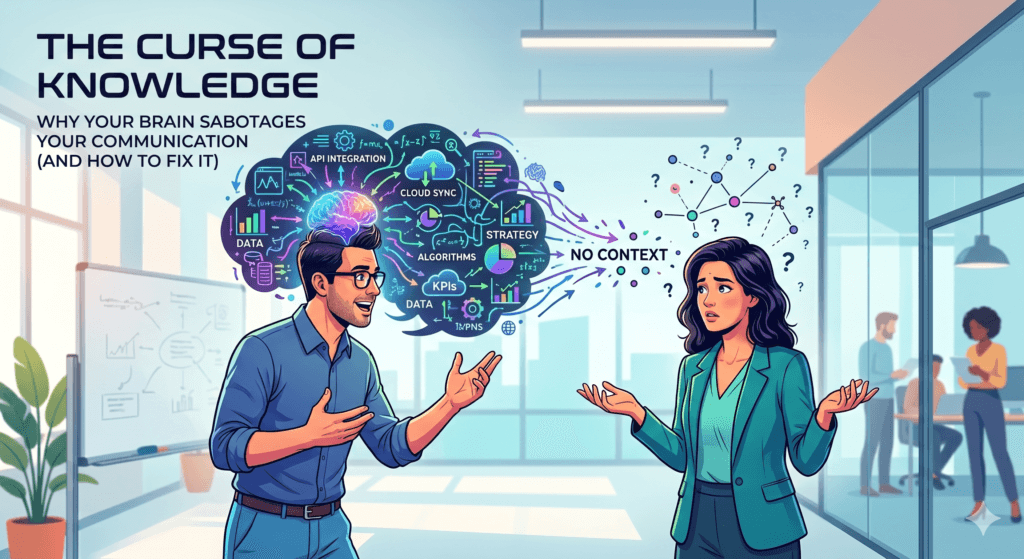
curse of knowledge psychology - behavioral psychology illustration
Posted inCognitive Biases

The Curse of Knowledge: Why Experts Struggle to Explain Simple Ideas

Posted by Mário Machado May 3, 2026
Learn how the curse of knowledge psychology (Camerer, Loewenstein, & Weber, 1989) blinds experts to what beginners do not know and how to communicate clearly.
Read More
illusory truth effect psychology - behavioral psychology illustration
Posted inCognitive Biases

The Illusory Truth Effect: Why Repetition Makes Falsehoods Feel True

Posted by Mário Machado May 3, 2026
Understand the illusory truth effect psychology (Hasher, Goldstein, & Toppino, 1977): why our brains mistake familiarity and processing ease for truth.
Read More
pygmalion effect psychology - behavioral psychology illustration
Posted inSocial Dynamics

The Pygmalion Effect: How High Expectations Elevate Performance

Posted by Mário Machado May 3, 2026
Explore the pygmalion effect psychology (Rosenthal & Jacobson, 1968): how leader and teacher expectations create powerful self-fulfilling prophecies.
Read More

Posts pagination

Previous page 1 2 3 4 Next page

About 99% Brain UP

Welcome to 99% Brain UP. We are a dedicated editorial team passionate about decoding human behavior, neurobiology, and the hidden mechanics of the mind. Our mission is to bridge the gap between complex behavioral science and everyday life, bringing you evidence-based insights every single day.

  • Facebook
  • Instagram
  • TikTok

Recent Posts

  • contrast principle psychology - behavioral psychology illustration
    The Contrast Principle: How Comparison Warps Your Reality
    by Mário Machado
    October 25, 2026
  • reward prediction error psychology - behavioral psychology illustration
    Reward Prediction Error Psychology: The Brain’s Dopamine Loop
    by Mário Machado
    October 24, 2026
  • cognitive dissonance psychology - behavioral psychology illustration
    Cognitive Dissonance: Why Your Brain Justifies Inconsistencies
    by Mário Machado
    October 24, 2026
  • confirmation bias psychology - behavioral psychology illustration
    The Confirmation Bias: Why We Only See What We Believe
    by Mário Machado
    October 23, 2026

Recent Comments

No comments to show.

Categories

  • Cognitive Biases
  • Dark Psychology
  • Neurobiology
  • Social Dynamics
Tags

Cognitive Bias Communication Decision Making Emotional Intelligence Influence Leadership Memory Motivation Perception Persuasion Social Influence

Ads

Exploring the intersection of behavioral science and daily life. We decode the complex patterns of the human mind through evidence-based insights and fascinating psychological discoveries.

  • Facebook
  • Instagram
  • TikTok
Scroll to Top
About Us & Editorial Policy | Privacy Policy | Terms of Service | Editorial Disclaimer | Contact Us

© 2026 99BrainUp — Edited by Mário Machado. Educational behavioral science & cognitive psychology publication.